Showing posts with label Instructional Design. Show all posts

Wednesday, February 5, 2025

One Day in the Life of...

Note: I wrote this story to talk about emotions to a group of young men, who believed there were only three emotions- happy, sad and angry. This story demonstrates several shades of these basic emotions including Pleased, Irritated, Anxious, Miserable, Relieved, Elated, Disappointed, Jealous, Furious, Inspired, Shy, Embarrassed, Proud, and Joyful. 

I looked in the mirror one last time. My hairstyle looked good. The new gel is doing the job it promised, I thought to myself.

I didn’t realize that Kiran, my little sister, was in my room and watching me. When our eyes met, she ran her hands in her hair and twisted her body, exaggerating my pose. I chased her out of my room. Can’t I have any privacy in this house?

In school, I looked out for Anaira all day. She didn’t come to class. She wasn’t in the canteen at lunch break. Where was she? Had anything happened to her? These thoughts filled my head. I couldn’t pay attention to anything or anyone else.

Not even Sid’s silly jokes could uplift my mood, and they were aplenty.

I saw Anaira as I stepped out of the music class. She was in the corridor, talking to someone. Just looking at her, it felt as if a load was lifted from my shoulders.

She smiled when she looked up and saw me. Her smile lit up the corridor. As I walked towards her, I felt I was walking on clouds.

Until I saw who she was with. It was Anshul - everyone’s favourite Head Boy!

She told me that her cycle was stolen in the morning, which was why she couldn’t come to classes on time. But Anshul had seen some young boys with her cycle and managed to get it back.

I didn’t hear the details. I just kept thinking why it wasn’t me who had found her cycle. Why did I sit in classes instead of finding out what was wrong? Why was Anshul always the hero?

On my way back, Sid joined me. We had plans to play basketball in the park. When I told him about Anaira’s cycle, he said it seemed all too convenient that Anshul happened to see the boys with the cycle. Too convenient!

It suddenly became clear to me. It had to be Anshul’s scheme to gain Anaira’s attention, like in old Hindi movies! Anshul is more than capable of such a stunt. What a scheming dog!

I ran back towards Anaira’s house to share this thought with her, hoping to see her before she went inside. I wanted to avoid her mother, who always looked at me as if I was a worm. Her father was different- kind and gentle, though he was a famous lawyer. I looked up to him and wanted to be like him when he grew up.

When I saw Anaira, she was standing with Shalini outside her house. I wanted to tell her what I had realized about Anshul, but suddenly felt awkward. What if I was wrong? What proof did I have? What if she thought I was the one scheming to make Anshul look bad?

As I stood there staring at them tongue tied, Shalini started laughing. I felt like a fool and wished I had never come there.

Anaira hushed Shalini and came towards me, still holding her cycle. She asked me if she could borrow my notes for today’s classes that she had missed, adding that I had the best notes in the class. Best Notes!

I took out my notebooks and handed them to her, without saying a word. I didn’t mention Anshul and my suspicions to her.  He just wasn’t important in that moment.

As I walked back towards where Sid was waiting for me, I felt that the world was beautiful again!

When teaching the concept of Emotions and Emotional Regulation, I realized that many of my students of BSA do not understand English well So, Sonika tranlated the story into Hindi. 

एक दिन प्रतिदिन…

जाने से पहले मैंने एक आखिरी बार शीशे में देखा। मेरे बाल अच्छे लग रहे थे। तो वह जेल्ल का प्रॉमिस ठीक ही निकला।

पता नहीं कब मेरी छोटी बहन मेरे कमरे में आई और मुझे देखने लगी। जब हमारी आंखें मिलीं  तो उसने मेरी नकल उतारते हुए अपने बालों में हाथ फेरा। मैंने उसे फटकार के कमरे से बाहर निकाला । क्या इस घर में मेरी कोई प्राइवेसी नहीं है?

स्कूल में सारा दिन में अनायरा को ढूंढता रहा। वह क्लास में नहीं आई। लंच ब्रेक में भी कैंटीन में नहीं थी। कहां थी वह?  उसे कुछ हो तो नहीं गया था?  यही ख्याल मेरे दिमाग में उठ रहा थ। मैं किसी और बात पर ध्यान नहीं दे पा रहा था। 

यहां तक की सिड के इतने सारे चुटकुले भी मेरा मूड ठीक नहीं कर पा रहे थे। 

जैसे ही मैं म्यूजिक क्लास में से बाहर निकला, मैंने अनायरा को देखा। वह स्कूल के कॉरिडोर में खड़ी किसी से बातें कर रही थी। उसे देखते ही मुझे लगा मेरे कंधों से कोई बोझ उतर गया हो। उसने मुझे देखा और मुस्कुराने लगी। उसकी मुस्कान से जैसे सारा कॉरिडोर रोशन हो गया हो। जब मैं उसकी ओर बढ़ा मुझे ऐसे महसूस हुआ जैसे मैं बादलों में चल रहा हूँ।

जब मैंने देखा वह किसके साथ थी, तब मैं बादलों से जैसे गिर कर ज़मीन पे आ गया। वह और कोई नहीं अंशुल था - सबका चहेता हेड बॉय!

अनायरा ने मुझे बताया कि सुबह उसकी साइकिल चोरी हो गई थी, जिसके कारण वह समय से क्लास में नहीं आ पाई। लेकिन अंशुल ने उसकी साइकिल कुछ लड़कों के पास देखी और वह उसे वापस लाने में कामयाब रहा।

मैंने उसकी बाकी बातें सुनी ही नहीं। मैं बस यही सोचता रहा कि मैंने क्यों नहीं ढूंढी    उसकी साइकिल। बाहर क्या चल रहा था, यह जानने की बजाये मैं क्लास में ही क्यों बैठा रहा? अंशुल ही हमेशा हीरो क्यों बनता है?

छुट्टी होने पर सिड मेरे साथ वापस घर चल पड़ा। हमारा पार्क में बास्केटबॉल खेलने का प्लान था। जब मैंने उसे अनायरा की साइकिल चोरी के बारे में बताया तो उसने कहा दाल में कुछ तो काला है. इतनी आसानी से अंशुल को साइकिल कैसे मिल गई?

तब मुझे समझ में आ गया। यह सब अंशुल की चाल थी अनायरा का ध्यान अपनी ओर करने के लिए, ठीक जैसे की हिंदी फिल्मों में होता है। अंशुल ऐसे कामों में बहुत तेज़ है। चालबाज़ कहीं का!

इससे पहले कि अनायरा घर के अंदर चली जाए, मैं उसे यह बात बताने के लिए उसके घर की ओर दौड़ा। मैं उसकी मां से नहीं मिलना चाहता था, क्योंकि वह मुझे ऐसी देखती हैं जैसे मैं कोई गली का कीड़ा हूँ। वह न ही मिले तो अच्छा है। उसके पिता की बात और है, वह बहुत अलग हैं। एक नामी वकील होने के बावजूद वह दयालु और नरम स्वभाव के हैं। मैं बड़ा होकर उनकी तरह ही बनना चाहता हूँ।  

तभी मैंने अनायरा को उसके घर के बाहर शालिनी के साथ खड़े देखा। मैंने सोचा मैं उसे अंशुल के बारे में बता दूँ। पर अचानक से मुझे थोड़ा सा अजीब लगा। क्या पता मैं गलत हूँ? मेरे पास क्या सबूत है? क्या पता वह सोच ले कि मैं ही अंशुल को बुरा दिखाना चाहता हूँ?

मैं निशब्द होकर वहीं खड़ा रहा। मेरी यह हालत देख शालिनी हंसने लगी। मेरे गाल लाल हो गए। मुझे लगा काश मैं वहां आया ही नहीं होता!

अनायरा ने शालिनी को चुप करवाया और साइकिल पकड़े हुए ही मेरे पास आयी। उसने मुझ से आज के क्लासेज के नोट्स मांगे और साथ ही यह कहा कि मेरे नोट्स क्लास में सबसे अच्छे होते हैं।

सबसे अच्छे!  मेरे नोट्स!

मैंने चुपचाप अपनी नोटबुक्स निकालीं और उसे थमा दीं। मैंने न अंशुल का नाम लिया न ही अपने शक का ज़िक्र किया। उस समय यह बातें कोई मायने ही नहीं रखती थीं।

जब मैं वापस सिड के पास जा रहा था, तो मुझे ऐसे लग रहा था कि दुनिया सच में बहुत ही खूबसूरत है। 


Tuesday, April 12, 2016

Teaching English- The Beginning

The first year I relocated to India, I taught a group of adults conversational English because a good friend requested me to. She didn't know if I could teach it well, neither did I, but I took it up anyway.

My class had 10-14 students, all working adults of varied exposure to English. At one extreme were people who had never spoken a word of the language and had no real need to do so. At the other extreme were a couple of women, who understood the language and used it somewhat in communicating with foreigners who visited their premises.

I didn't take my task lightly. Having been an Instructional Designer for years, I firmly believe in the power of design when teaching. I spent hours researching ESL techniques and adapted them to my class. I looked forward to the classes, seeing my techniques come to life with the students and learning to be a better teacher in each class. A high point was when the class wrote and performed a play in English. Every student participated and showed everyone in the audience (including me) that English is within everyone's reach and one doesn't need perfect English to communicate in it.

I was interested in the process of teaching, and derived happiness and energy from it. The end result was not my focus, mainly because I had no benchmark and no experience. But results were happening, in their own ways and influenced by factors I didn't control. The two people who showed the most improvement were intrinsically motivated and had opportunities to practice whatever they learned. A few others described a shift in their dealings with English speaking friends- from embarrassment to nonchalance, which doesn't seem like a big deal, but it is. It is a huge step in looking at a language as a language, within reach and doable, and not some superior upper class shit that is just not meant for the poor and disadvantaged.

Unfortunately, the NGO whose staff I was teaching decided their staff didn't have the time for my classes. My experiment came to an abrupt halt.

I was sad no doubt, but the vacuum created as a result spurred me on to new things. The next post will deal with these.

Wednesday, April 30, 2014

Teaching Conversational English in Rural India- My Experiments

I recently volunteered to teach conversational English to a group of adult students. This being my first time teaching English, I read up a lot and tried different techniques. While it is too early to say exactly which one worked and which failed, I have seen some successes and have an idea about what I want to keep doing and what I want to stop. I am sure everything will be clearer in a few months' time.

This post is my attempt to document at a high level this experience of teaching conversational English to adults. I am breaking this post in three parts: Principles, Techniques and Results.

Principles 
Here are the broad principles that I have used, some well planned and some noticed in retrospect. These principles were weaved in every interaction in the class.

1. ARCS
Attention-Relevance-Confidence-Satisfaction (ARCS) was the starting point and continues to be one when I prepare for a class and when I conduct it. I may not know much about teaching English, but I know without doubt that motivation is a must. So, I try my best to understand what motivates the students and keep refining my understanding of it. All my lessons are then designed to meet these personal goals of my students. 

(Here is another situation in which I have used ARCS successfully:  http://accidentalceostrategicmom.blogspot.in/2011/12/preschool-arcs.html)

2. Stay Away from Grammar 
I take this teaching assignment very seriously. So, I read up a lot on how to teach people to speak a language they have studied in school. I must have read about 50 articles and watched countless videos. The one message that made perfect sense to me (mainly from http://EffortlessEnglishClub.com) was that if 5-10 years of learning grammar in school did not teach students to speak the language, another 6 months of doing the same is not going to help!

Also, seeing Aloka learn Hindi in the last four months made it obvious that grammar rules are given unnecessary importance in schools. If a child can learn to speak a language without knowing grammar rules, so can my students. As a result, we don't use words like tense or prepositions or verbs in my classroom. And if any student uses such words, I pretend I am hearing Pahadi that I do not understand! I use correct grammar while teaching, but I don't teach grammar. 

3. Immersion

Not rocket science this. Immersion is essential when learning a language. Aloka's recently acquired Hindi skills are a stark example of this. Atreya's plan to study German in Germany is another. Language is about communicating and if you don't listen to it and speak it continually, it can never be mastered. So, at least in my class, students have to speak only in English, with very rare exceptions. The results of this principle can be extremely frustrating for some students (and sometimes for me as well). But every now and then, we all see a breakthrough and it is all worth it.

4. Personalized Attention and Correction
I read in one of the websites about the need to learn deeply, instead of learning widely. From my experience as a learner and a trainer, I know that we learn deeply that which matters most to us, and what matters most to us is ourselves. So, I try to highlight one area of improvement for each student based on their activities and ask them to learn it deeply, often ignoring other learning points covered in the class. Each person may end up learning a different thing in a class, but they learn it deeply. Quality versus quantity. Instead of trying to learn a lot, learn only a little but learn it deeply.

5. Vulnerability and Personal Rapport
The biggest stumbling block in learning English by Indian adults is the shame associated with speaking incorrect English. If I am going expect my adult students to shed their insecurities and become vulnerable in front of me and the class, then they have to trust me totally. They have to see me as someone who is like them, who is vulnerable and imperfect, even though she may speak fluent English. Ironically, vulnerability begets trust and a personal rapport. So, I don't teach from a mountain top like a guru who has reached somewhere, but from among them, as someone also on a journey to learn, albeit something else. 

6. Fun
As a principle, I make my classes fun. I believe that everyone learns best when they are enjoying the process of learning. I don't believe in standing up and giving a lecture for more than 10 minutes in a class because listening to lectures is no fun, so I limit one-way presentations to an absolute minimum and add elements of interaction and participation in every class. It works for me too, for I would hate to have to carry on a boring lecture for 1 hour. Students come to my class expecting to have some fun, and I don't think they are disappointed often. 

7. Class Composition
My small but very driven advanced class!
Not really a principle, but I could analyze it in retrospect as one. I was given a mixed class when I started- there were students who spoke English often as part of their work (but not fluently), and others who had never spoken a sentence in English, and some others who were in between. I went along with this group without complaining because frankly I didn't know much about teaching English anyway, so was yet to form firm opinions. In retrospect, having a mixed class of colleagues who were friendly with each other worked quite well. This is how. In the initial days, when I was the stranger to all and perhaps intimidating, the advanced students supported and encouraged the beginners. And having advanced students in the class encouraged me to talk totally in English because at least 3-4 students were nodding and not looking lost!

After 15 classes, however, I see the need to split the class according to their competency level. The beginners need more attention on things the advanced students already know, the advanced students need personalized support only possible if the group is smaller, and the intermediate students need to take on leadership roles and support the class.

Now on to specific techniques that I tried.

Techniques

1. Focus on Quick Wins
Quick wins here mean stuff they can master quickly and start dealing with English without hesitation. One of the fastest wins has been greetings. Everyone was asked to think of ways of greeting each other, and other people they meet, and present both- the types of greetings and the response- in the next class. One of my very clever students tried it on me without my even knowing it and shared my response in the class the next day. I learned something about myself that day!

2. Address Common Problems

I observed a few problems such as live in/at, meeting on/at/in, incorrect framing of questions, and past form of some words like fall, drink, eat. These became lessons for weeks to come. 

3. Memorization

Although I am not a fan of memorization, I found it very powerful when teaching English to folks who had never spoken it. I gave them a few questions about themselves (name, age, village, family, who they love most, and their deepest desire) and had them write the answers on a piece of paper. Students could help each other. Once written and spoken and corrected by me, they had to memorize their introduction. Then we recorded the introduction on my iPhone and made them listen to it. The idea was that information about themselves should be the easiest to remember, and when opportunity comes, it should be the easiest to tell. Just having another medium (recorded voice) added the fun element.

I plan to extend this activity to creating scripts for common situations they encounter and making them memorize. The idea is not that they remember each word, but are so familiar with the vocabulary required and the correct sentence structure that it gets ingrained in them.

4. Listening as a Skill

Once again, this came to me from seeing Aloka learn a new language. She began to speak Hindi only after she began to hear it. So, I talk a lot in English in my classes and then ask questions about what I spoke. Most of what I talk about are my personal and sometimes juicy stories. Because more of this is needed than I can manage in classes, and because my students have very little chance of listening to English outside of the class, I record articles and have them listen to them as homework assignments. 

5. Speaking Practice
In every class, we have some speaking exercises. I choose topics that make them uncomfortable and animate them, such as arranged versus love marriage, favorite movie/TV show, crime in the neighborhood, food they like to eat, and describing each other. 

6. Short Activities
I try to keep lecturing limited to one or two key learning points in a class. For example, I might talk a bit about how to talk about, but once this is done, the focus shifts on the students practicing what they learned.

For this, I devise short activities for each class. Here are some of the activities we do in the class.

a. Build a Story: One person starts a story and each person adds to the story in turn. This activity generates a lot of fun and forces students to listen carefully and speak.
b. Show and Tell: I randomly give objects to students and they have to speak 1-2 sentences about the object. 
A role play in action! 
c. Passing the Parcel: The person who ends up with the parcel has to choose a slip of paper from a bag and talk about the topic written on it. Topics are color-coded for a mixed class, and people can choose an easy topic or a tough one based on their level. 
d. Role Plays: I split the class in pairs and give them a topic, or have them choose one, to act out.


A game to practice describing quantities! 
e. Sentence Building Games: I have successfully used Aloka's sentence building jigsaw puzzles for my classes. For teaching correct use of verbs for subjects (subject-verb agreement), I wrote subjects and verbs on separate pieces of paper and had students work in teams to construct correct sentences. I used a similar game for practicing how to describe quantities of things. 
f. Quiz: These are based on the topics taught. Students are asked to identify correct and incorrect sentences. Sometimes I give them printouts, and sometimes just write on the board. Sometimes they answer as individuals, sometimes as teams. Variability is key to keep their attention.
g. Communication Games: There are two games that served well to force students to communicate in English with each other, often ending in frustration with their lack of mastery over the language. The first is a jigsaw puzzle of a world map. Students can only speak in English when requesting specific pieces to fit and once the map puzzle is fully made, have to describe parts of the world to the class. Another game is used commonly in leadership training- describing a picture while another person draws it based on the description. 

7. Extensive Activities: English Play
At the end of 15 classes, the class was asked to write, direct and act in a play in English. The topic was of their choice- alcoholism. The engrossing and funny play was presented to an audience of about 30.  Many actors forgot their lines and spoke incorrect English. That didn't matter. What mattered was that 12 adults, most of whom had never spoken in English before, found the courage to stand before an audience and speak confidently, while having fun. I was in the audience, seeing the play for the first time, and was overwhelmed by their energy and courage and confidence. 


Results
Nine people from this group were part of my class. 
Language teaching is an endless task. Results are slow and depend on a number of factors controlled by the students' environment. I have been able to capture some feedback from my students' colleagues and sometimes the students themselves about their progress. Here are a few. 

1. A few of the foreign volunteers who work in the organization remarked that several of my students have begun to take initiative to speak to them in English, even if it was to greet them in English. Some others have gained enough confidence to carry out longer conversations. 

2. One of my students shared that while he hasn't learned enough to speak in English, he was able to face one of his English-speaking foreign-returned friend confidently, simply because he was no longer scared or embarrassed about not knowing the language. He even attempted a few sentences and had a laugh at his mistakes. 

3. One of my star students has shown tremendous improvement, as per the feedback I received from her boss. In addition to speaking a lot more in English than she did previously, with foreign guests and locals, she has even started using work-related idioms in her emails. 

I couldn't be happier!

Tuesday, October 9, 2012

Mastering the Mix

A few years ago, I was describing my then team to a potential customer/business partner. I took pains to highlight that the team consisted of veterans in ID and graphics design and as a result, we avoided the common pitfalls and gained on productivity. To me, this differentiated our company from other larger competitors in India. The customer/partner didn't look impressed at all and remarked that his company only hired fresh talent because they were so much more creative. Honestly, for a moment I felt dowdy.

The business partnership never took off, but his remark stayed with me for a long time. Over the years, I figured out something about e-learning development teams- for a team to flourish, you need a bit of this and a bit of that.


You need the experienced folks because you don't want to reinvent the wheel each time. If developing training for, say, a software application, there are only so many ways to do it effectively. If a person who has never done it before creates it, the output is wasteful and never as good as it should be, however creative that person may be. That single person's creativity across one project just can't compete with ideas implemented and fine-tuned over years by thousands of people. I have seen this first hand 10 years ago and then again recently.

Experienced people usually have a repository of tools and templates to fall back on. But there's a problem even here. They are quick to jump to conclusions and solutions, without looking at a particular situation deeply. For this reason, you also need rookies who are not yet molded into a set style. Rookies, who lack these tools, struggle a lot more, but are more likely to experiment and try out new ideas. They see things with a fresh pair of eyes. The end result is likewise refreshing. I have experienced this first hand too a few times, most recently when I worked with a creative young designer on a module teaching voice commands to cadets.

Sounds simplistic and obvious no? On paper yes, but in reality, the challenge in building and sustaining such a mixed team is in the dynamics of the team on the ground. Are they able to work together, contributing the best they have, or are they busy putting each other down? Are rookies learning from the past experiences where needed or repeating the mistakes arrogantly? Are the experienced folks allowing the rookies to experiment and valuing their new insights? Or are they busy trying to mold them into the  familiar?

It is precisely because it is so hard to make such a team work effectively that organizations tend to be of one or the other type. But when you master the mix, magic is possible.

(Image from: http://www.vectorfree.com/paint-explosion)

Saturday, September 1, 2012

Can we bring them together?

The other day, someone asked me to look at an e-learning course on aviation in order to estimate the effort for developing similar courses. I had less than an hour of access to the course. As usual, my brain went into a hyper mode, absorbing and analyzing everything I saw.

My first reaction was sheer pleasure. The illustrations of the airport and planes were done fabulously. There not an element out of place. Layouts were varied and polished. Text holders were contextual, derived from the aviation world- some in the shape of a display screen at airports, some others in the form of tickets and so on. Animations were short, sweet and well executed. Just the kind of stuff I love to see. (I wish I could share some screenshots but I don't have the rights to).

Not only me, I thought to myself, this will also be the first impression that any lay person will form upon seeing the course. But I am no lay person in this context, so I started to check what the content was really about. The topics included history of aviation, agencies involved, key functions/parts of airports and the type of staff needed to operate airports- a strange mix indeed. I began to wonder who the audience was. Who would need this information, which seemed too superficial for airport staff and too detailed for general public?

I dug deeper. Why wasn't I getting hooked to the content? I noticed that the contextual text holders occupied only about 50% of the screen area available. The rest of the screen was used to hold absolutely unimportant (though contextual) illustrations and animations, like some passengers standing around inside the airport, a plane taking off at the back, some clouds moving across the skies etc. The limited space inside the text holders meant that all the content was cramped inside them, making it difficult to read. This was especially a problem when the content talked about logos of various aviation agencies. The space was so limited that the logos were quite minuscule and I never really could differentiate one from another. The other text holders like the airplane ticket posed similar problems but had an additional issue of navigation. Every time I clicked a ticket, another one popped out in front of it, but there was no way to go back to view the previous roles.

I went through the pages several times to "get" what I was expected to understand from the content, but each time I only got bits and pieces. There was no connection between the pieces and no attempt was made to connect them even artificially. I had no reason to learn anything specifically because it seemed like an information dump. I became aware of this problem acutely when I found myself struggling to answer the most basic recollection-type quizzes!

I have to mention that the quizzes that tested me on stuff I never really got to learn were done very cutely- an airplane would carry the options to the placed I selected! Misplaced efforts? But who am I to say that? From what I knew, the customer was very happy with the course and wanted more of the same type.

At that moment, I had this sense of helplessness. After years (16-17 years) of dealing with this issue, here it is again, just in another form. On one end of the spectrum are arrogant designers who defend PowerPoint-like (and ineffective) courses by pontificating about the deep instructional value of the work they do, and the insignificance of aesthetics and visual design to their work. On the other end are clueless designers who hide poor instructional material behind flashy layouts and cute animations.

I am left with questions that linger on even today, weeks after I saw this course.
  • Is it so hard to bring the best of the two worlds together? 
  • Why can't good instructional and visual designers collaborate to create learning material that actually helps people learn? 
  • Why do people in the industry continue to struggle with this issue after years of working at it? 
  • I know it can be solved- after all I had seen it solved in KP when I was there, but is it sustainable or is it linked to specific people and their skills?
  • Will our industry elevate itself out of this rut one day or is it the nature of the beast?

Tuesday, August 21, 2012

Grey on Grey

When it comes to e-learning, there are FOUR adjectives that have been so overused that they convey nothing anymore. They stand out just about as much as grey stands out on grey. I see them in every website and every proposal about online learning and feel my eyes glazing over as I read them. And I am not a mute spectator either. When I am writing, these four slip out of my fingers onto my keyboard, slithering and sliding, and claim their place on my documents. I tell you if I never see them or write them again, it will be too soon.

Can you spot the overused four in this graphic?


Now tell me, did you find this post interactive, engaging, compelling and visually appealing?

No? Thank Gawd! 

Monday, June 4, 2012

I, Learner!

Since my first day at work, I had been hearing about this dreaded Excel worksheet (let's call it b5z) that people in my role need to use when preparing budget. In the very first week of my starting work, I saw a colleague working this sheet diligently. I recall being in meetings where his sheet was the topic of heated discussions and questions by the Finance team. I didn't understand the half of it, although the inputs to it were mostly provided by me. All this confirmed my fear of the sheet and the skills needed to use it.

Later, I looked up an online course on the topic, which was basically a recording of an expert talking as he navigated a very complicated-looking b5z. I watched it for five minutes and then gave up, even more convinced that this stuff was beyond me.

Last month, I once again came face-to-face with b5z, but now I was expected to work on it and own it. The same colleague was asked to teach me how to use it. It took me about a couple of hours with him, spread over 2-3 sessions, to get confident about using it. I spent another 8-10 hours tweaking my entries and by the end of it, I was buzzing with a high that comes from learning new things and overcoming one's fears.

Being a learning designer, I am used to analyzing what helps people learn, so here is an analysis of what worked for me in the process of learning this new skill. 

Urgency of a Real Problem
I had an urgency to learn because there was a real live problem to solve. Learning was critical to my success. This made me focus and absorb everything I was being told. I was fully attentive and the topic couldn't be more relevant.

A Coach
I had an experienced practitioner walking me through the sheet, highlighting portions that would be most relevant to me. He was aware of the simple self-constructed Excel sheet that I had been using the past few months and could relate that sheet with b5z (constructivism!). He used language I understood and shared his own lessons learned along the way. Having him around took away my fear of trying and gave me confidence that I could succeed.

Tips and Tricks
The coach not only walked me through the sheet, he also shared some tips and tricks he had picked up over the last few months, like how to do a "goal match" every time I did a major change to the sheet, how to look for problem notifications and the most important of all, when to know that a problem was not fixable and the sheet needed to be trashed and started all over again!

Quick Feedback and Success
Lastly, it was knowledge of success that egged me on. I mentioned the simpler sheet I was using earlier. Having that open in another window and seeing numbers more or less matching was a great boost to my confidence. Of course, the correctness of my entries was confirmed later as several people reviewed it, but that came later in the process.

Now to the hard part of this article. Since I am from that world, how would I teach someone to use this sheet in an online virtual environment? How would I make that experience as effective as mine had been? Here are my thoughts based on my experience as a learner, not as a designer. (There is a big difference between the two. The designer in me just wants to dip her hands into her repertoire of tools and techniques and prescribe what is best for this type of content because she knows best, whereas the learner in me questions every overused technique and seeks real value from it.)

Provide an Introduction
I would provide an introduction, but instead of a long-drawn soliloquy extolling the virtues of this mother-of-all worksheets, it would be short and direct, focusing on these three messages only.
  • Why this process? This would be presented in the simplest of words, avoiding all jargon. 
  • What if it wasn't there? A short story of how things were before this sheet was standardized would be powerful here.  
  • What is the scope of activities you can perform using this sheet?
Nothing more, nothing less.

Teach According to Need
The b5z sheet is complex because it caters to the most complex of situations. However, not every user uses all the features of the sheet because not every situation calls for it. I had perhaps used only 25% of the features the first time I used it. There may be situations in future when I would need to use more features, but for my current need, I didn't need to know it all.

Building upon this personal experience, I would design the online experience based on increasing levels of difficulty. There would be several scenarios, from simplest to the most complex, that learners would be able to choose based on their current needs.

Break Down the Process 
I would break down the whole process into key things one does when using the sheet, such as calculating direct and indirect costs, overheads and depreciation. Every concept and activity that follows would be tied neatly to these activities.

Show Them How To
Seeing someone do the task is a great confidence builder, as I experienced first hand with my coach. So I would certainly show them how it's done. But instead of running a mindless "do this do that" demo animation, I would make the most use of each screen, highlight why I am doing what I am doing and the consequences of mistakes. 

I spent some time thinking if a series of clearly-labeled screenshots would be better than an animated demo in this situation. I finally concluded that an animated one would be useful only because learners need to jump between several worksheets in order to accomplish one task. This might be lost in stills. And yes, I would have simple narration supporting this animated demo.

Practice Practice Practice
I would make the learners practice every task using two different ways. The first would be via a simulated sheet, which would be like the "Let me Try" mode of a Captivate simulation. Although this mode allows for some practice in a safe environment, it is too restrictive to provide the kind of experience I had.

To provide a richer experience, I would include practicing using a real b5z sheet. Since it's Excel we are talking about, everyone would have easy access to the software. In each practice session, learners would have to fill in the data in their sheet and compare the results with the sample solution available in the learning material. This would serve as "quick feedback and success" of my own learning experience.

Test 
This is where I struggled. Do I really need to test these learners on the skills needed? Aren't the practice exercises enough? Would some quiz questions really help this learner? The answer to this was, once again, based on my own experience as a learner. While I would not like to be tested on my knowledge and skills, it would be good to know what experts consider as most critical to success skills/concepts while using this sheet. Answering these, and getting feedback on them, would certainly enrich me.

So, I would include some highly valuable questions here and there to highlight key facts and mistakes. For example, I could show an error message and ask learners to identify what could have gone wrong. Each question would be well researched and thought-through to add value to the learners' learning experience.

Finally, this experience and thought experiment left me with some annoying questions. These are not new and have been voiced by others in the past too, but they are very real in the context of this experience. Perhaps another post is needed to delve into them, but here they are in brief. 

Most e-learning courses are an outcome of collaboration between a content-agnostic ID and a content expert or SME. However, the course strategies I have described above would never have come about had I not been in the learner's shoes myself. 

Can IDs really be in learners' shoes when designing a course? Aren't they too caught up in their techniques and strategies to deeply think about what a learner really really needs? Are SME's the best people to support learning program development? Aren't they too caught up in their knowledge to even understand those who don't? Mind you, the person who coached me is a practitioner, not an SME. (I dread to think how an SME would have taught me!)

Is there a missing role or roles in the design and development process? 

Wednesday, April 11, 2012

Consume' my Resume'

In the last few weeks, I have spent a lot of time reviewing candidate resumes for a few roles. One thing that struck me was how difficult it was to quickly get the essence of the resume. Some resumes were too detailed, some didn't have enough and some were just too complicated. In either case, I ended up spending significant time extracting the relevant information by myself. There was also a high chance that I missed seeing important information because it as hidden in huge amounts of text. Finally, I couldn't help but think how identity-less these resumes made the candidates appear...like rows of gray suit-clad professionals lined up.

Yesterday, I read an article that showed how recruiters scanned resumes. Very interesting. And proves that my frustration with resumes is quite common. Read it here.

http://www.businessinsider.com/heres-what-recruiters-look-at-during-the-6-seconds-they-spend-on-your-resume-2012-4
(Ironically, this article discourages use of visuals!)

Based on my own experience of drafting my resume, which I did several times last year, I understand why resume writing is such a problematic task. There are no standards that one can follow and the advice you get online is varied and too generic. Finally, most people don't spend too much time crafting their resumes. It's a task to be completed (usually at the last minute), and once done, it doesn't get any major overhauls, only tweaks.

While searching for good resume formats last year, I came across a few that were really exciting, designed like infographics. Imagine receiving a resume like the first two shown in the article below. It will stop the recruiter in his/her tracks!

http://www.coolinfographics.com/blog/2010/1/8/16-infographic-resumes-a-visual-trend.html

(Note: The first time I had seen a visual resume was when Ananda Gupta had sent in his a couple of years ago. It was not as complex as some in the article, but it was mindblowing in its message. In one shot, it told me what he had done in the last few years, and in that one shot, it also told me that he and his creative work were not separate entities.)

This makes sense from an ID perspective as well. Don't we spend hours visualizing complex concepts because a well-designed visual can aid understanding and learning...and what pray is more complex than a person's professional journey? The similarity continues. Just like when visualizing concepts, there is a danger of overdoing and missing the point (some of the resumes in the article above are too complex for me). And just like while designing instruction for complex concepts, the audience must be the centerpiece- content must be designed so that it speaks to the audience. My son just commented that the worst would be to have to explain your infographic to the recruiter!

I really wanted a fancy infographic like in the article above, but didn't have access to the tools and resources required. However, the idea of simplifying and visually representing one's journey was something I was committed to implementing. So, I went for a regular Word resume, but added a single visual showing my career progress over the years, companies I worked with, roles I held and the countries I lived in. No fancy tools used, no help from anyone, just me and my favorite "tables" in MS Word.

(Click to expand)

I have no doubt that this representation can be improved drastically with just a little bit of effort...after all, this was also done last minute! But I also have no doubt that people reviewing my longish resume would have found this visual representation, like an advanced organizer, a relief and an aid. And no doubt that it injected a bit of my colorful personality into the drab black and white document!

Friday, March 9, 2012

Anatomy of an Instructional Game

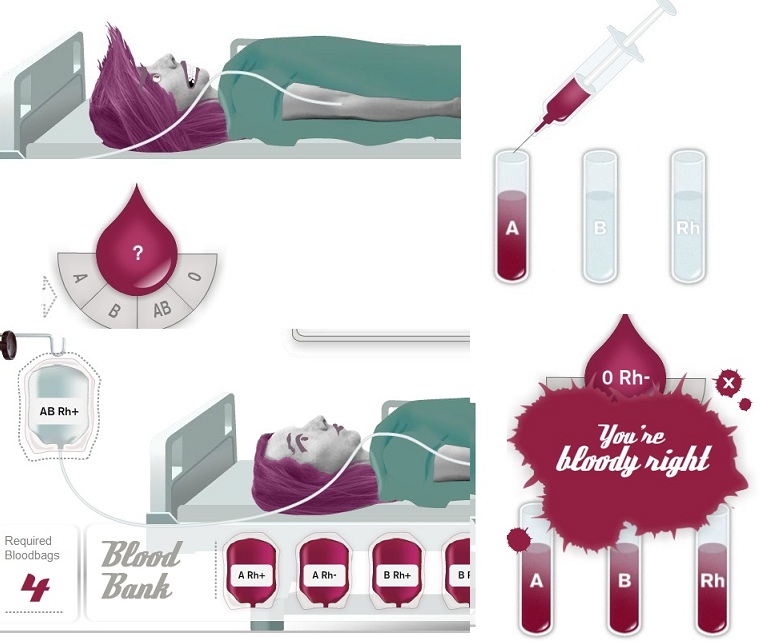
Having believed for over 18 years that my son Atreya's blood type was B+, we got a shock of our life when his NS (Army) card had O+ listed on it. My first reaction was that the NS guys had made a mistake and insisted that he get it corrected. Three weeks later, his blood was retested and the result was again O+! Someone had indeed made a mistake, but 18 years ago!

A few days after this incident, I was preparing to make a short presentation to a small group on games in online learning. I decided to use a paper Purnima and I had written on games (see http://www.astd.org/LC/2008/1008_purnima.htm) as the anchor for my presentation. I also decided that instead of listening to my discourse on games, the audience should experience the power/problems of games in learning by playing some online games. Unfortunately, I no longer have the rights and access to the games we had referred to while writing the paper. So, I searched high and low for game demos available online. And guess what I came across- a game on blood typing!

As I played the game, I found myself immersed. Part of the reason was of course its personal relevance to me because of the recent incident. But there was another reason too. It was a good game. This was reinforced by the reaction of each one of the six people who played it in front of me during the session.

What Made it a Good Game?
Before I analyze the game and say what worked for me, first play it for a bit here:  http://www.nobelprize.org/educational/medicine/bloodtypinggame/game/index.html

1. Alignment of Content and Context
The interactive and its wrapper were totally aligned. There was nothing artificial about context (people needing blood transfusion) and the content (identify blood type and select donor blood) of the exercise. Artificiality of context, very often seen in learning games, jars and distracts and makes the misaligned context an irritant. An aligned context, on the other hand, becomes invisible and aids immersion. 

2. Learnability
The game was a total learning tool by itself- it did away with the need to have a tutorial. Before playing the game, I had only briefly looked at the supporting learning materials explaining blood types, tests and compatibility, not long to master the content. Likewise, my session participants were not given enough time to read the supporting learning material thoroughly. Despite that, after playing the game for 2-3 scenarios, each participant had learned that a reagent clumping means you have a match, and that O can donate to all and AB to none but itself.

3. Sufficiently Challenging
The task required by the game was fairly challenging for a lay person, at least in parts. When I first played it, the concept of reagents clumping was new to me and posed a challenge. In the session, I heard enough shrieks (from the game and the participants) to know that wrong blood types were being administered. Today, weeks later, I found myself stumped by the concept of compatibility of Rh+ and Rh- factor. This new challenge, and the confidence that I will overcome it by playing the game, made me want to play the game again.

4.  Variability via the Content
The interactions in the game were repetitive, giving the players a chance to better themselves. Though repetitive, the game was not boring because of the nature of the content. The 4 blood types and the Rh factor provided enough permutations and combinations to bring variability to the experience.

5. Variability of Interactions
There was variability in the ways users interacted with the game interface. It included jabbing a patient for blood sample, dropping the blood sample in test tubes, selecting the blood type and placing the blood bags on the stand.

6. Fun Factor
Finally, even though the context is serious, the overall tone of the game was fun. Feedback included statements like "You are bloody right" and visuals/audio clips of patients getting electrified if you gave them wrong blood type. There were simple animations of test tubes shaking and blood flowing into tubes and the interface had a relaxed gamey feel to it. Just one thing bothered me...why were the visuals of people done so badly?

There is one more thing I learned from the game- even though all of us wrongly believed Atreya to be B+, he was never in any real danger. Hospitals always check the patient's blood type using these reagents before giving any transfusion just as the players of this game do! I double confirmed this (pardon my Singlish) with my doctor mommy!

Did you also like this game? Did something else work for you (or didn't)? Do share here.

Saturday, January 7, 2012

New Hire B'orientation!

When it comes to New Hire orientation/induction training, I see a sense of desperation in many organizations. So much to tell, so little time. It's a classic case of "we know a lot of it won't make sense and they won't remember, but let's tell it anyway"- reminiscent of school teachers focused on completing the syllabus. I am not talking of one to two organizations here- I have seen this happening in many and believe it is a common problem.

I sort of get it, this need to tell all, especially if you are a large organization with many divisions and accomplishments, and an audience base that's varied. New hires need to get a sense of how big and varied the company they have joined is. There is a need to build ownership and pride. And of course, to break walls between divisions that tend to work in silos.

But really, there has to be a better way. Just moving the verbal diarrhea from classroom to online can't be the solution. Just dumping content in pages after online pages, and hiding a lot more in audio narration, can't be the solution. Just getting some in-love-with-his-own-voice trainer to go through hours of PPTs day after day in a real or virtual environment can't be the solution.

Why does this happen? Surely not because L&D folks don't know their stuff.  Maybe there are constraints of budget, time, resources or management buy-in. Perhaps there is some history of past failures and lessons that people are not ready to unlearn. Perhaps there is a diversion of design talent towards the all time favorite topic- Leadership Development. Maybe ROI doesn't justify the expense. Or perhaps, the likeliest, new hires don't complain about quality of their learning experience as much as other employees do.

As a designer and business manager, I get all this. But as a learner, the situation sucks. Who will speak for the learner? 

Tuesday, December 27, 2011

Preschool ARCS

Being a second-time mom after a gap of 14 years has made me pay attention to many things I missed the first time. For example, I don't recall much of how Atreya learned to read and write as a young child, primarily because I was quite a hands-off mom the first time around.

This time with Aloka, I am totally involved, so much so that I get quite anxious when I think of all that she has to learn. Just a few weeks back, I was quite cross that English language had to have lowercase and uppercase letters (unlike Hindi), something that had never occurred to me in all these years. It's another matter that she picked up the uppercase symbols with no help from me by just playing some spelling games on the iPad.

Another difference in me as a second-time mom is that I have been immersed in Instructional Design for several years and can't help but look at every thing through the lens of ID. This article is a result of a day filled with writing about ARCS in a proposal and an evening spent working with Aloka on numbers and words.

Attention
Keller described three strategies of gaining attention: perceptual arousal, inquiry arousal and variability.

To get Aloka's attention, I use variability of media the most. A session on numbers typically involves number magnets that she can move around and paper/pencil to practice writing. I also have a few number matching games downloaded on the iPad, but she outgrew them pretty fast. For reading and writing, we have puzzles, iPad games, activity books and the good old paper and pencil. If I see her losing interest, I often just change the medium.

Another technique that works very well for both of us is humor. It's a sure shot way to get back her flagging attention. So, if she writes a letter or number that is not as straight as it should be, I ask her if it's about to fall because another naughty number tripped it. Or when she had trouble distinguishing between 13 and 30, I told her that thirty has the "tea" sound and when she serves tea to her guests, she must remember to put the saucer under the cup- the saucer being the number 0. Now every time she writes 20 or 30, we make slurping sounds and have a laugh.

Relevance
According to Keller, there are three strategies of making content relevant to learners: goal orientation, motive matching and familiarity.

Fortunately for me, Aloka is driven in many areas of her life by competitiveness towards a particular friend called Medha. The way she dresses, prefers her hair tied, eats her food, plays games- it's all done with the sole intent of doing them better than Medha. Now, her goals and motives for learning are also aligned to that goal- do better than Medha! The best part of it all, I didn't have to devise this strategy- she came up with it herself.

Confidence

The three strategies described by Keller to make learners confident are learning requirements, success opportunities and personal control.  

The strategy I use frequently with Aloka is opportunity for success. Giving her stuff she is good at every now and then, and not just at the beginning, works wonders. When she is struggling with her d's and b's, I switch to her favorites like t's and f's for a while. Reminding her of her past success also works very well- so I often show her old worksheets she had done and talk about how well she had done yesterday.

Satisfaction
Keller described three strategies of increasing the element of satisfaction. These are intrinsic reinforcement, extrinsic rewards and equity.

No rocket science here- extrinsic rewards are what work with Aloka. Of course, the type of rewards I use are based on my understanding of her. She craves for my approval, so simple words of appreciation and a hand shake after each victory is all that is needed most of the time. Sometimes, I call Atreya or Mallika to show how well Aloka has written something. And the age old "stars" never fail- she is a sucker for stars.

An aside: One would think that everyone would know that kids need approval/rewards but its not so. I recently downloaded a spelling app on my iPad, in which a picture of an object is shown and you drag and drop appropriate letters to spell the object's name. To my surprise, all that happens after you have correctly spelled a word is that the next arrow gets enabled. No music, no sound, no visual change! Aloka played that game twice before ignoring it completely, although it seemed to be of the right level of difficulty for her. On the other hand, a much simpler game, in which she had to click on a letter that was being pronounced, had her attention for a long time and she still gets back to it every now and then. The difference? The letters in the second game had little arms and feet that danced and moved if she got it right- the reward you see! 

Monday, August 22, 2011

Lessons from a Webinar

I recently had the chance to present a topic of my choice via webex to a group of people more or less unknown to me. I had never met any one of them before and had spoken on phone to only one of them. I had a vague idea of their backgrounds and guessed that a topic on content structures would interest them. I would have liked to know more about the participants but the situation didn't allow it.

To prepare for the presentation, I worked hard on my PowerPoint deck, looked for examples and fine tuned the content, went through a few webinars and youtube videos on how to make webinars interactive, pottered around with webex (even trying a test webex session with Atreya and Akhila), timed myself, wrote down my talking notes, added interactions every 2-3 slides, and practiced my presentation. Following the best practices I had read, I added my picture on the first slide and also created a loop to keep the participants hooked while we waited for the rest to join in.

My biggest worries were about technical hassles during the presentation. Would the annotations work? Would I hear the people talk clearly if they asked a question? My trial version of webex gave me trouble with "raising hands" so I fretted over that too.

But the problem I faced was of a totally different nature. Never having met my audience, and not even being sure of their background, it was like I was giving my presentation with a blindfold on. Having been a classroom trainer, I am equipped to detect audience mood and level of perception, but I do that with my eyes. With a blindfold on, and with the audience as if sitting in pitch dark, my skill was useless. Webex interactivity gave me some idea of how the audience was perceiving the content, but it could not change the fact that I didn't know the people I was talking to. At the end, I didn't come out feeling I had accomplished what I had set to achieve as a trainer.

The lesson I learned was most basic. No rocket science here. Whatever the situation, whatever the purpose, I have to know my audience better when facilitating a webinar. The virtual environment will naturally create this wall between the presenter and the audience, but that wall need not and should not be totally opaque.

In retrospect, what could I have done to make it a better experience for myself and for them? I could have known more about them before the session started, such as what they do in their jobs, what they understand about the content I am presenting, and what interests them. I would have insisted on seeing their profiles (job role, location, picture if possible) before the session even if it was difficult to convince them to give this information to me. I could have simplified the presentation a bit (had I known that the audience wasn't that familiar with the content and jargon) and could have planned for more time for quizzes (essentially reducing the content). It's one thing to time yourself in a practice session and another to time yourself in the real presentation. I could have helped myself by adding timers on slides reminding me how fast/slow I need to go. Finally, I could have been less in love with the content myself and gotten less carried away with the intricacies and nuances of what I was talking about. 

Tuesday, August 2, 2011

Deconstructing Content Structures

Introduction

Over years of designing learning content, one of the things I have become good at is structuring content quickly. I had a lot of practice doing this because in addition to creating outlines for courses we were commissioned to develop, I also created draft structures or outlines when writing proposals. It was a self-prescribed must do for all proposals I wrote because it enabled me to make sense of the limited information (manuals, or PPT decks) that we were provided by the client at that stage. Under the circumstances defined by time pressure, limited resources, and no access to SMEs, I had to develop my own methods to quickly understand and structure whatever information I had. These methods were intuitive and I never really had a chance to deconstruct them.

Recently, I had the occasion to revisit the concept of content structures. I came across a great article about different types of content structures (the eLearning Coach) and it got me thinking of the types of structures I have used most frequently. Of the 10 types listed in the article, five caught my attention. In this piece, I share my thoughts about these. 

  • Order of Importance
  • Inherent Structures
  • Sequential
  • Simple to Complex
  • Subordinate to Higher


    Order of Importance

    When the content is essentially flat and there is no hierarchical relationship between concepts, then you can use the structure to highlight the relative importance of the different content pieces. Beginning with the most important piece of content at the start is smart because learner attention is at its maximum at the start, and at its least towards the end (learner fatigue, also somewhat linked to Design Fatigue!). By presenting the content in a certain order, you also send a subliminal message of what the organization considers most and least important.  For example, in a fraud awareness course we developed for a bank, the first type of fraud discussed was Identity Fraud, followed by Documentation Fraud and ending with Internet Fraud. Why did the SME and designer agree to start with Identity fraud? Was it because it was considered the most serious of all types of fraud? Or was it posing a current threat? Whatever the reason, there is no doubt that by placing Identity Fraud at the start, the bank sent a message about the topic's importance. 

    Unfortunately, most designers and other stakeholders in the design process do not appreciate the power of this type of structure. For example, in many induction programs that I helped design, the HR team insisted on starting with History, Accolades and Organization Structure because these were considered important by them. No amount of persuasion would change this. The reality is that new recruits need to be reeled into the long induction programs by information that is most relevant and important to them and their initial high attention needs to be used to impart messages that require most alertness. Starting with boring historical information is a sure way to lose the advantage of high attention at the start of the program. Starting with Code of Conduct would be far better, but I have never managed to convince any HR manager to do this. 

    Inherent and Sequential Structures

    Sometimes, things have an inherent structure that you can't ignore. For example, human skin is made of the outermost epidermis, the mid layer of dermis and the inside layer of hypodermis. This is the skin's inherent order of "being". When teaching a student about parts of skin, it makes sense for the learning material to follow the naturally occurring structure of the skin, starting with the familiar outermost. Changing this order will only detract from the learning process.

    I came across such a content structure when creating an online training for bank staff about the five fair-dealing guidelines issued by MAS in 2009. These five guidelines are organized by MAS as Outcome 1 to Outcome 5. Regardless of which outcome is the most important for an organization, or the hardest to implement, or the easiest, or any other criteria, the naturally occurring inherent order of the guidelines (decided by MAS in this case) will lead the design of the learning material created to train employees on following them.

    The sequential structure is similar, except that it contains an inherent order of "doing". When teaching someone about a process or procedure, for example of how to manage risks, it's most effective to teach the process in the order in which it gets done. In this example, it would be identifying the risk, then measuring its severity, putting risk mitigation actions in place, and finally tracking progress. This is regardless of the fact that measuring the severity of the risk is the most complicated of all the topics listed and would benefit from the high learner attention present at the start. In short, we set aside all other criteria and use the naturally occurring order of "doing" for the most effective learning to occur. 

    As designers, if we detect an inherent or a sequential structure, our job of structuring is done to a large extent. These inherent structures of "being" and "doing" are good friends. 

    Simple to Complex

    This is an interesting type based on the theory of constructivism, which states that the learner is the architect of her own knowledge and uses existing schemas to build new ones. Applying this principle to content structures, one starts with the simplest (and sometimes the most familiar) concept and progresses to the more complex ones.

    I have used it in a particular project for a company where a new business objects application was replacing 11 existing applications for creating business analytics and reports.
    Keeping in mind the unavoidable resistance to change, I suggested using the first module to create a very simple report, highlighting how similar the new application was to the existing ones. As a result, only a fraction of the features available in the new application were used in the first module. The later modules progressively highlighted the more complex features of the new application. This structure was quite counter-intuitive to the architects of the new product, who needed a lot of convincing from my side to accept it.

    Point to note here is that the first module was not a pre-requisite to the later modules. Each module was complete in itself and didn’t depend on previous modules. We chose to structure the content in that particular way to reduce resistance to change, and to help learners learn faster by fitting the new application into their existing mental schemas.

    Subordinate to Higher

    In this type of structure, there is a hierarchical nature to the content. Some concepts must be learned before others can be grasped. For example, in a course on money laundering, learners can’t grasp the methods of preventing money laundering unless they are aware of the methods used by money launderers. Likewise, in a course on conducting training, learners must first know the characteristics of adult learners before they can comprehend specific presentation techniques used for training adults. Unlike the Simple to Complex structure, there are pre-requisites involved. This is not about using existing schema, but about imparting pre-requisite knowledge before the higher order knowledge can be understood and assimilated. 

    In Conclusion

    Having never before deconstructed my thought processes while designing content structures, this exercise of introspecting and reflecting on my choices for the structure chosen in a particular situation has been very satisfying. It has validated many of my decisions and also explained why I would sometimes come out of the structuring process feeling uncomfortable. Hope this will stir some thoughts in other designers and generate more food for thought.